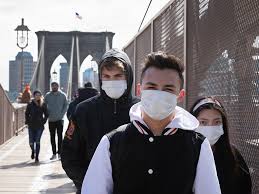
Downtown Portland is a scene out of an apocalyptic novel. On the bus to work, I sit in one of the few available seats for social distancing. I keep my gaze out the window and my hands safely wrapped around my bag. We drive down empty streets, the lights still flicking through green, yellow, red, although there are no cars to heed their allowance.
At my stop, I mutter a muffled thank you to the driver through my mask and open the push-doors with my elbows. It’s sixteen blocks through North West Portland to the restaurant I work at. We’ve been suspiciously busy, but I assume it’s the loyal throng of locals that have been patiently waiting for a shaken martini since March. Graffiti marks buildings as far as I can see; Not even artistic, just messy. Buildings are boarded up on both sides, a feeble protection against the protestors that will be coming out for the 59th straight day tonight. Graffiti marks the protective boards as well.
Tents blemish the sidewalks everywhere, some in large groups and some sitting alone. I pass a small, cheap blue one, set up alone next to a manicured tree. The tent flap is open, and there is a woman sleeping inside. I wait for the crosswalk at the next block and can’t help but breathe in the sharp scent of urine, strong even through the filters of my mask. Sometimes, safely past that area, I’ll take off my mask when no one is around, and breathe in the clearer air of summer. It is the air of honey and pine trees, sap and water nearby. It’s at these times that it smells recognizable, like the city I love and grew up in, a city that is boisterous and weird and proud. I am able to conjure up old memories, even as I cross the street to avoid walking past an especially large tent convoy, not necessarily because they are dangerous, but because you really don’t know. The only people out on the streets of downtown are the ones that live on the streets of downtown. And, as someone who has volunteered many hours to the homeless of this city, I know they are largely harmless, but that mental illness and drug use may make them unpredictable. Just like staying away from the protests at night, it is better to be overly cautious this summer.
I pass a restaurant on my left, a large, red brick building with a beautiful dark wood sign proclaiming Andina. They haven’t yet reopened. I ate their last August, just before my birthday. I was with a good friend, and afterwards we hopped on two of the city’s electric scooters and rode all the way across town, taking a pedestrian bridge that overlooks the Willamette. We went from North West to South East in a little over an hour, laughing and speeding through old neighborhoods, keeping out of the way of people and cars. Our biggest concern then was running out of battery.
As the Travel Portland website states, “What’s good for tourism is good for Portland.” The numbers for 2019 alone are impressive. The website boasts that the Portland region welcomed 8.8 million overnight person-trips, and that visitors generated $5.6 billion in direct spending. The travel industry itself in the city is responsible for 36,930 jobs. As far as tax relief goes, travelers generated $277.8 million in revenue, easing the tax burden from local and state residents, according to the site.
This is where Portland receives a double negative. Not only is the city not accumulating all that precious tourist money this entire year, but it has been destroyed by protestors and rioters. At the top of the Travel Portland website is a dark grey banner that hangs down over every page, gravely warning about the protests, stating, “violent confrontations have occurred, exercise caution in the area, especially late at night.” Luckily, I’m home by ten thirty most nights, but I’ve heard stories. I’ve seen wounds. Once this fiasco wraps up, what will the city be left with? An enormous clean up mess, paid for by taxpayers.
I, like all my fellow Portlanders, still have hope. We are fiercely proud of this city we live in. Of the man buns, the overalls, the plaid shirts and plethora of tattoos. Of the exalted love around bookstores and coffee shops, the hundreds of Mom & Pop shops that we pray will reopen. The beauty of the residential neighborhoods, each house unique and ancient, sitting eternally under a canopy of foliage, where trees from both sides of the street grew up and out and wrapped arms with each other. We watch the episodes of Portlandia and shake our heads in denial while laughing, knowing full well that their portrayal is entirely accurate if slightly exaggerated. We all smile with our eyes, desperate to convey our humanity and kinship with half our faces covered. Keeping an appropriate distance as though we fear each other but dreaming of the days where embraces and handshakes rule again.
We are not the only city suffering. The need for tourism reaches far past the confines of the Portland Metro area. Chicago, New Orleans, New York City, Houston, Las Vegas, Nashville, and all the cities beyond are all hurting this year. But beyond these, to the rest of the world. According to an early June article by Yasmeen Serhan with the Atlantic, Europe’s tourist industry is looking at losing 100 million jobs this summer, with revenue falling by more than a third. She smartly states that, “Restoring tourism isn’t just an economic necessity for the continent, but also a cultural one.” Even when, or if, the world returns to a place where we can freely cross the pond to Europe, travel will look very different. New safety measures will be in effect, from flying to hotels, shopping and eating, it will all look drastically different than it did in the summer of 2019. And this is something we must be okay with, so that one day we won’t have to be.
 Amateur Ramblings