Good Morning, Anxiety

Last night I worked my last shift, again, for who knows how long, again. On November 18th, Multnomah County goes on a “freeze” for four weeks, possibly more. My restaurant isn’t open Mondays or Tuesdays, so last night my coworkers and I said our goodbyes and wished each other good luck.

I understand it’s inevitable.
I understand it’s for the greater good.

It doesn’t make the impact any less threatening to my livelihood or mental wellbeing.

I’m not angry at Kate Brown. Or the virus. I’m angry at the world. At our lack of cooperation. At the anger and hate that’s been spewing amidst this sickness. As if a divide and dislike of each other will ensure our immunity.

It saddens me to see this city’s walls fall to hate tags, streets strewn with garbage, seemingly more people on the streets than off them.

I was born at St. Vincent’s three decades ago. I have lived many other places but continue boomeranging back despite my family dissipating to other states. It is still my home, and I’ve always harbored romantic “grass is greener” fantasies when living in Manhattan, LA, Malibu, Santa Barbara. All of these lively, beautiful places I said goodbye to because Portland felt superior in my mind.

Then why am I riddled with thoughts of escape?

It could be the drive-by shooting I witnessed last Saturday, (casualties also including my car and neighbors apartment) that claimed the life of a homeless man living 20 feet from my front door. His tent is now a makeshift memorial, amidst the dozen others on my adjacent sidewalk.

It could be my coworker’s bike being stolen right outside her living room window.

Or the hit-and-run I witnessed yesterday morning, by an extremely angry truck driver and the victim in a Nissan Leaf. Screw you, truck driver. Pick on somebody your own size.

It could be the morbid articles my friend sends me daily, detailing the aforementioned hate put into action.

Though perhaps it’s just the reality that I’ve now lost my job for the third time this year, due to circumstances out of my control, and it feels as though I’ve time traveled to March, though a few things are different. One being the lack of federal help to individuals and small businesses. Now my boss gets to man his takeout operation with no help, 7 days a week, because he can’t afford to pay any of us to come in.
Second being, we are not on the brink of Spring, but of its evil cousin, where the days continue to shorten and rain continues to fall.

Not all of these realities are Portland’s fault, but they are all my reality living in Portland.
I know logically that other places are experiencing this with us, but I can’t turn off the fight or flight instinct in which my fight has been drained for months.

These situations together have allowed an anger to seep in to my soul, and it makes me feel likeminded to the atmosphere here. And I do not want to be likeminded.

I want my happiness back.

If you unfold these layers, Portland is still beautiful. It still smells of the crisp, fresh air I’d thankfully fill my lungs with after a flight from NYC.

The leaves continue to change, heedless of a pandemic, ignorant to political tension. Their autumn hues going through the exact same process in 2020 as they did in 2019.

The view from the top of Tabor Park, sitting on a bench overlooking all of Hawthorne, allows you to imagine a different world. The tiny cars at that distance, trundling up and down, could seem like a snapshot of any other year in the past decade.

Our residents have a pride for their state that the US would envy.

We accept tourists and transplants, are eager to share all our hiking secrets and brunch knowledge.

We are a kind people.

But we live in a world where we’re told not to socialize with others. Keep your distance, don’t travel unless necessary. No frivolous outings, take-out only, cover your face. We treat each other like a disease, which is not far off from what we’re trying to avoid, but it’s turned into more than that. We are being trained to avoid each other. They didn’t lie, it is indeed the new normal.

I now watch movies and marvel at the strangeness of all the naked faces, cringing at close contact.

It is hard to remember our love for each other when we can’t show it or see it in a passing smile. Our muted affection has allowed other unseemly emotions to surface.

My best friend asked me if I wake up with anxiety like she does. I said every day. Like something bad has happened but it slipped your mind, and you’re just left with the feeling, unable to pinpoint exactly why it’s there. I joked that if we could harness all the anxiety in the US, we’d have clean energy for a millennium. Clean and nervous.

Do me a favor in this lockdown: read a book, write a letter to your loved ones, order takeout from your favorite places, shop locally, do kind things for yourself. Allow time to breathe and reflect and remember that everyone is a person deserving of love, despite the hideousness of judgement these past few years have brought. Hate begets hate. Kindness and understanding beget compassion and respect.

Oregon is so much more than our current reality, and the sun will one day shine on our mask-less faces.

The Truth About Selflessness

He clicked on the link in the email from his parents, a URL labeled “Vacation Rentals Around the World”. Apparently, they were members of this fancy anywhere-in-the-world timeshare and wanted to share it with us. The room was dark, but the light from the monitor illuminated the stubble on his face and his unbuttoned dress shirt. I sat on the bed behind him, helping him muse over the list of available locations. We were in our tiny one-bedroom apartment in the Upper West Side of Manhattan. It was January and freezing, and I was wrapped in the faux fur blanket I stole from the couch. Sometimes, in this apartment, with its exposed brick wall and coffin-sized kitchen, I’d feel the walls closing in. But not now. Now, through that URL link, the whole world was open.

I was still getting used to this lifestyle. My parents split when I was 12, but before that, in the final days of their struggle, we hopped from motel to motel trying to stay afloat, following job opportunities. One week, we couldn’t scrape enough together for a motel, so we stayed at the gymnastics academy where my mom worked the front desk. We’d sneak in at night, my parents, us 4 kids and our dog, and sleep on the slightly bouncy floor where the girls in leotards did their routines hours before.

Once my parents divorced, we went with my mom, which created more stability but still saw us in Section-8 housing, buying 10-pound bags of rice and sewing patches in jeans.

I met Blake in May of my 19th year. We quickly bonded over our shared love of fantasy books and poetry. The connection felt instantaneous, but he left a week later to travel Europe for the summer. During that time apart, we wrote each other constantly, the emails stretching on like novellas. He came back early, for me, and we spent the rest of the summer together. But he was moving to NYC in August, starting his first year at Columbia Law. I visited a couple times before he asked me to move out for him. And, in October of that year, I did. It was my first time officially out of my mother’s roof. I had just turned 20 and knew nothing of the world.

His parents had afforded him a lifestyle I was completely unaccustomed to. Their house sat on a lake, boasting four stories with an elevator. They paid his way through life, including a monthly allowance higher than anything my bank account had seen. They paid our rent in Manhattan, a luxury I could not fully appreciate until much later in life. And now they were insistent on sending us out of the country for Spring Break. I had never been out of the country; I didn’t own a passport. Easy solution, his parents expedited one for me on one of our visits back home.

Now it was January of the following year, we had known each other 8 months, and we were planning an international trip.

He read through the options slowly as we scrolled, “Paris, Belgium, London, Barcelona, oh look New York City, Prague, Edinburgh…”

As he listed them, I couldn’t shake the feeling that Europe wasn’t the first place I wanted to go. I felt spoiled even considering that, but I had a relentless image of Mayan ruins in my head.

He sighed, turning to look at me, “Where do you want to go?”

I didn’t hesitate. “Belize.”

“Belize?”

“I know it sounds silly, but they have some excellent ruins there, and caves with sacrificial victims still in them. And if you feel more like the beach, they have that, too.”

I waited for him to scoff, but rather he looked considerate.

“Well, I have done Europe three times already.”

He did a search on the site, yielding zero results of Belize, or anywhere in Central America. So much for a travel-the-world site, I thought.

“That’s okay, we can choose from what’s listed. Europe has ruins, too,” I was already imagining what those might look like when he closed the link entirely.

“No, let’s just book it through a Belize site.”

I was taken aback; I didn’t know that was an option. So easy, just to decide to book something. No thought of prices, availability, etc. Just assuming things will work out in your favor. It was a mindset I was beginning to understand. Money buys ease.

Two months later and we were waiting in the John F Kennedy airport. There was a bird in the rafters. The ceilings were high. White and industrial, with fluorescent lights at the very top, like tiny suns that wouldn’t let you sleep. It was dark outside, and rainy. The windows lining the walls were black with the sky, reflecting the light from inside. The bird would fly towards them, then back to the pillars. Confused, I thought. Keeps thinking the grass is greener but realizing its all the same. I wondered if the grass would be greener in Belize.

They were burning their garbage. I was on a small, cramped shuttle van, with the words “Cheap Rides” spray-painted on the side in an ominous red. It was taking us from the airport to the jungle cabins where we’d be spending the next three nights. The whole ride, I couldn’t take my eyes away from the window, where the ramshackle neighborhoods we passed looked like the locals had put them together themselves. Baked mud for the walls, the roofs an array of large-leaved plants. And they were burning their garbage.

This fact alone I needed to digest for longer than the shuttle ride. My mind was racing. I started my undergrad in Anthropology, the study of people. I spent a good amount of my free time observing strangers. Watching people meet up for coffee, discerning if it was a first date or an old friendship. Taking note of the feeling of crowd’s at theme parks, in concert venues, at protests. Enamored at how people affect people, how intimate relationships work and how often people’s true nature comes out in public. But I’d never seen anyone burn their garbage outside shacks.

I’d only ever studied people in atmospheres I was familiar with. But here I was in 2011, 20 years young and bewildered, having landed in Belize only an hour before, intent on coming to study the culture, be awestruck by the Mayan ruins. I did not account for the poverty. My heart hurt as I watched the figures standing around their burning compost, dirty and half dressed, many of them children. My eyes rimmed with tears as I was hit with the sudden realization of my Western life. According to the Pan American Health Organization, “Belize’s 2009 Country Poverty Assessment found a child poverty rate of 50%, which exceeded the national average of 41.3%”.

We arrived at the jungle lodge. A little piece of luxury amidst the wilderness. The abodes were made to look like huts, with straw strewn on top, the rooftops with a point in the middle, like a teepee. There were ten of them, all connected by a wooden bridge to keep us off the jungle floor. The bridges also led to a commune area in the middle of the property, where cafeteria tables let us eat dinner together in the evenings. To the left of the dining area was a large field, exotic plants lining the outside, that led down to a small body of water. Our rooms were quaint, with Wi-Fi, a bathtub and a window overlooking the lake. The air smelled heavy with green life. I brushed my fingers over a leaf from a low-hanging tree. It was large, bigger than both my hands. A plant I had never seen before, in a world I had just arrived.

The man that ran the place was an expat from Australia. Despite his white skin and thick accent, he was incredibly knowledgeable about the country. He had a dozen activities we could choose from, so we lined our few days there with as much adventure as possible. It was easy to forget the level of poverty an hour from our resort when we kept busy.

The second morning we headed out early with a group to spelunk a nearby cave with, you guessed it, sacrificial victims still on display. The cave was cold and dark, as most caves are, and the glow of our bobbing headlamps created an air of surrealism, like we were in a Nancy Drew murder mystery. But unlike the lightheartedness of young adult books, the death here was very real. Under the careful direction of our tour guides, we each took turns climbing a short, wobbly ladder imbedded against a rock wall. Five rungs, then a clear view of the top. A woman, they told us. Stabbed in the heart and through the back. The bones arranged tucked together, wrists and ankles tied. She looks so small, I thought, and in the same position in death as she was at birth. I looked in eyes that were no longer there and wondered if they held fear in her last moments. Did she believe she was dying honorably? Was she willing?

That night, most of us melancholy after the day’s excursion, we drank wine with our fellow travelers, ate a delicious meal prepared for us by the kitchen staff, and fell asleep to the peaceful sound of Howler monkeys. If you haven’t heard the melodic songs they lull you to sleep with at 3am, I encourage you to google it.

On the third day, we took a six-hour bus ride roundtrip to see the ruins. It was only ten miles away, so I was confused at the reported length of the trip until we turned onto the side road. Quickly the journey went from paved streets to a dirt one lined with massive potholes. The small bus we were on decreased its speed and made dramatic turns left and right to avoid them. Belize has a network of roads consisting of over 1,900 miles, but only 357 of those miles are paved. As we blundered along, I saw a smattering of tattered huts, stretching out for about a mile. Close to ruins themselves, I thought. Halfway through this small village, I noticed a gathering of people in the same, dirty clothes. Maybe 30 in all. A few were raising their hands. Curiosity got the best of me, and I made the tumultuous walk to the front of the bus.

“Excuse me, but why are they in a crowd?”

I saw the bus driver’s eyes flick up toward me in the mirror, then right to the small crowd, then back on the road. He was wearing a baseball cap promoting Belkin beer, and had a white tee on inside out.

“They’re having a town meeting, if you can call it that. They meet twice a month, maybe more, maybe less, to see if they’re sharing provisions equally. If some are low on food or water, others share what they have.”

The simplicity of this effective kindness struck me. Such a selfless and obvious act, helping your neighbor, and yet so foreign in the States. I didn’t even know the names of our neighbors in NYC, or the neighbors in my mother’s apartments. The way I had been raised was to keep your head down, figure out your own way through life and don’t ask for favors. But with these people, they weren’t favors, they were second nature. It was how they all survived, how they continued their little village.

I understood then their struggles. I could relate to the tattered clothes, the hunger, but I doubt they shared the same shame I had when friends saw where I lived. The high school I went to was upper middle class, and I had always struggled to maintain an image, to at the very least be accepted, if not popular. I always envied how much my friends had, how big their houses were and how happy they all seemed, going to the mall as they pleased and ordering expensive food from our school’s cafeteria. I had a habit of sitting in the corner of the bathroom during lunches, unable to afford to eat and not wanting to be seen not eating. I secretly resented them for not offering me a dollar or sharing their lunch. I was always wanting a community to help my family, but now I see my family was my community. My mother and all my little sisters, we were unnaturally close due to our struggles. My sisters would mend my clothes, style my hair, console me after bad days. My mom was always trying to be as creative as she could in the kitchen, making what we had into fun meals. We were ‘forced’ to sit together for dinner every night, but I saw that now as her struggling to keep us together, to keep us feeling as one. Despite our trials, we had each other’s back, as the people in this village had one another’s. I only felt shame because I was thrust in world’s different than mine, but the people holding their bi-weekly meeting had only themselves, they were so far off the road to tourism and civilization.

As we passed them, I saw the whole group laughing and pointing as a small child danced near the front.

The folk I saw burning their garbage days back, I was suddenly sure that they were happy. They had their struggles, as did all humanity, but I was sure they found happiness in their own circumstances. Trials of life vary from individual, but they can all result in the same appreciation for what you have. I imagine all the people I had seen living their lives in their huts and worn clothes had joy in their own ways, and that they didn’t consider themselves as unfortunate as I first labeled them. Who was I to decide how sad they are, how aware of their statistics in the world they are?

Touring the ruins later that day, I had a new perspective on the people that occupied them thousands of years ago. I imagined their daily lives, what they shared among themselves. I imagined them holding village meetings and passing along provisions to those in need. I imagined their laughter and their pain. I pictured the funerals and births and wondered if they celebrated birthdays with the same manic importance that we did. They held their calendar in high esteem, after all. I wondered if a small, dancing child had ever made them laugh.

Works Cited

Belize. Health in the Americas. https://www.paho.org/salud-en-las-americas-2017/. Accessed 5 August 2020.

The Roads and Highways in Belize. Barefoot Services Belize. June 2016. https://barefootservicesbelize.com/the-roads-and-highways-in-belize/. Accessed 5 August 2020.

Rising from the Ashes

Downtown Portland is a scene out of an apocalyptic novel. On the bus to work, I sit in one of the few available seats for social distancing. I keep my gaze out the window and my hands safely wrapped around my bag. We drive down empty streets, the lights still flicking through green, yellow, red, although there are no cars to heed their allowance.

At my stop, I mutter a muffled thank you to the driver through my mask and open the push-doors with my elbows. It’s sixteen blocks through North West Portland to the restaurant I work at. We’ve been suspiciously busy, but I assume it’s the loyal throng of locals that have been patiently waiting for a shaken martini since March. Graffiti marks buildings as far as I can see; Not even artistic, just messy. Buildings are boarded up on both sides, a feeble protection against the protestors that will be coming out for the 59th straight day tonight. Graffiti marks the protective boards as well.

Tents blemish the sidewalks everywhere, some in large groups and some sitting alone. I pass a small, cheap blue one, set up alone next to a manicured tree. The tent flap is open, and there is a woman sleeping inside. I wait for the crosswalk at the next block and can’t help but breathe in the sharp scent of urine, strong even through the filters of my mask. Sometimes, safely past that area, I’ll take off my mask when no one is around, and breathe in the clearer air of summer. It is the air of honey and pine trees, sap and water nearby. It’s at these times that it smells recognizable, like the city I love and grew up in, a city that is boisterous and weird and proud. I am able to conjure up old memories, even as I cross the street to avoid walking past an especially large tent convoy, not necessarily because they are dangerous, but because you really don’t know. The only people out on the streets of downtown are the ones that live on the streets of downtown. And, as someone who has volunteered many hours to the homeless of this city, I know they are largely harmless, but that mental illness and drug use may make them unpredictable. Just like staying away from the protests at night, it is better to be overly cautious this summer.

I pass a restaurant on my left, a large, red brick building with a beautiful dark wood sign proclaiming Andina. They haven’t yet reopened. I ate their last August, just before my birthday. I was with a good friend, and afterwards we hopped on two of the city’s electric scooters and rode all the way across town, taking a pedestrian bridge that overlooks the Willamette. We went from North West to South East in a little over an hour, laughing and speeding through old neighborhoods, keeping out of the way of people and cars. Our biggest concern then was running out of battery.

As the Travel Portland website states, “What’s good for tourism is good for Portland.” The numbers for 2019 alone are impressive. The website boasts that the Portland region welcomed 8.8 million overnight person-trips, and that visitors generated $5.6 billion in direct spending. The travel industry itself in the city is responsible for 36,930 jobs. As far as tax relief goes, travelers generated $277.8 million in revenue, easing the tax burden from local and state residents, according to the site.

This is where Portland receives a double negative. Not only is the city not accumulating all that precious tourist money this entire year, but it has been destroyed by protestors and rioters. At the top of the Travel Portland website is a dark grey banner that hangs down over every page, gravely warning about the protests, stating, “violent confrontations have occurred, exercise caution in the area, especially late at night.” Luckily, I’m home by ten thirty most nights, but I’ve heard stories. I’ve seen wounds. Once this fiasco wraps up, what will the city be left with? An enormous clean up mess, paid for by taxpayers.

I, like all my fellow Portlanders, still have hope. We are fiercely proud of this city we live in. Of the man buns, the overalls, the plaid shirts and plethora of tattoos. Of the exalted love around bookstores and coffee shops, the hundreds of Mom & Pop shops that we pray will reopen. The beauty of the residential neighborhoods, each house unique and ancient, sitting eternally under a canopy of foliage, where trees from both sides of the street grew up and out and wrapped arms with each other. We watch the episodes of Portlandia and shake our heads in denial while laughing, knowing full well that their portrayal is entirely accurate if slightly exaggerated. We all smile with our eyes, desperate to convey our humanity and kinship with half our faces covered. Keeping an appropriate distance as though we fear each other but dreaming of the days where embraces and handshakes rule again.

We are not the only city suffering. The need for tourism reaches far past the confines of the Portland Metro area. Chicago, New Orleans, New York City, Houston, Las Vegas, Nashville, and all the cities beyond are all hurting this year. But beyond these, to the rest of the world. According to an early June article by Yasmeen Serhan with the Atlantic, Europe’s tourist industry is looking at losing 100 million jobs this summer, with revenue falling by more than a third. She smartly states that, “Restoring tourism isn’t just an economic necessity for the continent, but also a cultural one.” Even when, or if, the world returns to a place where we can freely cross the pond to Europe, travel will look very different. New safety measures will be in effect, from flying to hotels, shopping and eating, it will all look drastically different than it did in the summer of 2019. And this is something we must be okay with, so that one day we won’t have to be.

I Can Still See Your Eyes

This was going to be the year I traveled more. I had been breathing life into a Europe trip for months, painstakingly mapping a route and selecting Airbnb’s at each destination. It was all paid for and planned, so much effort and excitement, the first time I’d be traveling by myself, just to prove that I could. To do something scary for the sake of doing it, to trust myself in any situation. I had even included my mom in the last half, paid for a cruise for the both of us. And then, COVID.

Just like that, I was out of work. My lease ended 6 weeks after I lost my job, and I couldn’t afford anything else, so I went and stayed with family. Almost 30, unemployed and living with my mother, with a lot of international cancellations to make.

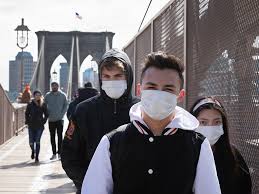
Here’s the thing, I’ve had ample time to wallow in negativity. I think we all have. For all of those that suffer depression, I am praying for you. For all of those that feel isolated and hopeless, you’re always in my mind. We have had TOO much time to think. During a season of deprivation and isolation, the biggest loss I feel is being able to smile and seeing it returned. Not only has our depressed economy been wearing a giant frown anyway, it’s ‘asked nicely’ (and in most cases forced) to put a cotton covering over any semblance of happiness left on our faces. We go around town seemingly robotic and unfeeling, unable to make out words spoken, to discern the mood of the guy in line next to you, to offer a kind grin to a passing stranger. We have lost our personalities and easy politeness, replacing it with 6 feet of fear and hesitation.

I figured it prudent that I make a list of all the good that has come out of this, even if I’m grasping at sanitized straws:

  1. CHANGE! Okay, I know not everyone is a fan. Some people enjoy their daily routine, remiss if unexpected obstacles get dropped in their way, but look at it this way – As we age, time speeds up. It’s a scientific fact. (Not really.) Days blend into weeks blend into months and then you’re using a walker. Memorable events break up this monotony. Life changes mark the passing of time, making it easier to look back and remember these days clearly. Oh, I have to move into a much smaller apartment and I’m counting my pennies now? Cool, I definitely won’t forget this.
  2. Cleanliness. I’ll admit, I have always been very aware of the dirt around me. I wipe my phone down with alcohol wipes every night. I make it a habit to not touch my face. I open public doors with my foot or elbow. I love having clean hands. So, in light of our current normal, everyone is getting these exaggerated habits of hygiene drilled into them. Also no one breathes down my neck in lines anymore.
  3. I get to find a new job! That sentence sounds like it’s dripping with sarcasm, but I promise, it’s not. I actually enjoy joining a team. I tend to only make friends at work (different blog post topic), so my work space becomes my social hour (while still over achieving my role.. looking at you, future employer). New beginnings are always full of hope; Despite all the bullshit I’ve gone through, I still genuinely believe that.
  4. A damn appreciation for the world we once knew. I have no idea when we’ll all stop breathing our own carbon dioxide, or when Citizen Cope will reschedule his Portland visit, or if the now-September Jo Koy show I had tickets for will actually happen, or when I’ll witness the beautiful, beautiful restaurant industry blossom again, but I can promise you I will never take these wonderful luxuries for granted ever again.

We will make it through this, people. And for the love of all that’s holy, just be KIND to one another. One day I’ll be able to laugh without sucking fabric in my mouth.

Ainslee

Limit-less? Limit-ed.

It’s been over 2 weeks since I’ve written anything. My mind has been empty and my fingers have been lazy. My mind is still empty but my fingers decided to work anyway.

When I first paid the yearly subscription to WordPress, I was bursting at the seams with abstract ideas and profound thoughts, eager to share my wisdom; Wisdom gained mostly from my cover-to-cover absorption of various authors, and little from actual real life experiences. Well, here we are, 5.5 weeks and 7 entries later, and my well is dry. But the clear, cold water that once filled my well is not gone forever. It seems that the owners of the well were thirsty, and greedy, and didn’t think of storing water for the long term but rather taking it all at once, excited to have struck water in the first place. No, it’s not gone forever. It is now just a process of waiting for it to fill up again. It might be slow going, the water patiently pushing through the walls of the well from the mountains up ahead, or it could be a sudden rush of snow melt that floods the well back to it’s memories of youth and vigor.

To be honest, I don’t know how wells work. And I don’t know how my mind works. I just know that sometimes it wants to write, and sometimes it wants to do everything else imaginable. I think I’m out of ‘blog posts’ for the time being. I want to work on a story. I’ve written down most of what I think about on a day-to-day, and, as my days don’t drastically change, neither do my thoughts. A better outlet now would be to make up a story, instead of waiting for it to happen to me. I will continue writing here for practice when I think of a deserving topic to devote a few hundred words to. Like, my dogs. Or the tiny ants that are currently invading our house. Or the consistencies between crime rate in third world countries and their lack of available organic foods.


I made that last one up.


Ainslee

Living In Sleep

The only way I’m going to get comfortable finding my voice on virtual paper is practice. Whether or not I feel like writing, whether or not I deem what I’m writing garbage or gold, if I get it out and type it down, it will be that much more practice at finding my prose. Thus, I present to you, my first-ever short story.

PS. I looked it up, and short stories generally range between 1,500 and 30,000 words, so while mine is sitting pretty at 1,736, it is indeed a short story.


Living In Sleep

Martin woke up. A feeling of loneliness weighs him down, and he struggles to remember his dream. Something.. sad. Incredibly sad. He tries to shake off the discord that he feels, becoming aware of his surroundings. His left arm instinctively reaches out for his wife, Grace, but comes upon only pillows and empty bed. He looks to the left and sees the imprint her sleeping head had made on the pillowcase. Breathing deeply, he deduces the time of morning by looking at the way the sun slants through the curtains. It casts a lovely golden hue on the dresser, one that he hasn’t seen before, and he realizes it must be later than he’s used to. No surprise, he couldn’t get out of the office until 1 a.m. last night.

It’s Saturday morning, and Martin can faintly make out the chatter of his two children down the hall in the kitchen. He slides his feet off the bed and into his slippers. Uggs, a gift from Grace this past Christmas. He scoffed at the brand that Christmas morning as he unwrapped them, but by God if they aren’t little clouds for his feet. As long as they don’t leave the house, he justified. Sidling past that golden hue and briefly through it, illuminating his old Nittany Lions shirt from his years at Penn State like it was a message from the heavens, Martin walks down the hallway towards the welcoming voices and smell of waffles. Always waffles on Saturdays. He glances up at the wall to his right, where Grace had so proudly hung the children’s newest school photos. Kyle, 13 and filled to the brim with brains and braces, a shock of red hair, smiling big enough to strain his cheeks, and Louise, sweet little Louise, 11 and soft spoken, just the hint of a smile and a natural beauty noticeable even in the dim hallway. Polar opposites and yet inseparable. Martin smiles to himself and lifts a hand, thumbing a smudge off the photo of Louise as he passes it.

He enters the kitchen and sees his wife at the stove, her back to him. Kyle is showing Louise something under his new magnifying glass Martin had picked up for him last week as a result of Kyle’s report card. All A’s, and the kid wants a magnifying glass. It still bewildered him. Looking up, Kyle and Louise both half-shout, “Hi Dad!” in unison, causing Grace to turn around.

“Good morning, honey, I’m glad you slept a little longer. I hope we haven’t been too loud”, Grace says with a wry smile, her right hand pouring batter as her left gestures over to the coffee pot.

“No, not all. I was having a strange dream, I’m glad I woke up when I did,” he admitted.

He pours himself a mug of coffee and goes to put an arm around Grace. She looks up at him, and he’s in awe, as he is every day, how the years of marriage and of raising kids have only served to make her more beautiful. How each wrinkle in her opalescent face, framed by the deep red of her hair, were a message of a life well-lived. He knows the story behind each wrinkle, each freckle, each bit of grey in the red that shows up more frequently these past years. He kisses her brow and goes to sit with his kids.

“Beach today?” he asks casually, and braces himself for the burst response of, “Oh, yes please! Yes please!” Kyle is jumping up and down while Louise turns to her mother, “Mom, can we? It’s sunny like you said it has to be and it’s a weekend and I finished my homework and well it was Dad’s idea anyway and..””Okay, okay”, Grace interjected, laughing to herself, “I can’t argue if your homework’s done. We’ll finish our breakfast first and then pack our day bags.”

An hour later Martin is navigating their Subaru SUV out of the driveway, the backseat an energy of it’s own with ecstatic kids and the smell of sunscreen. They leave their street behind, Martin waving to Mr. Fowler tending to his prized roses; Mr. Fowler waves back. Driving out of their Sorrento Valley neighborhood the few miles to Black’s Beach, Martin breathes in the fresh, salty air of their San Diego suburb and is happy to be alive. The lingering feelings of the dream are still there, he can still sense the sadness, that feeling of nothing, of having nothing and being nothing, but it’s easier to dispel while being outside, while driving his wife and children to their favorite beach.

A short time later, Martin is laying on a beach towel, arms behind his head and propped up, watching Louise shyly dip her toes in a wave, while Kyle was bent over studiously observing something under his magnifying glass. He hears Grace flipping a page in her book, probably a new romance novel judging by the man and woman exaggeratedly embraced on the cover. He knows she’s smarter than that silly literature, but he can’t deny her her small pleasures. She sees him looking at her and puts the book down.

“You going to tell me about your dream now?” She asks quizzically, raising her eyebrows one after another.

“There’s not much to tell,” Martin confesses, “I can’t remember exactly. I know I was alone. But, like, really alone. There was no one around, and no one I could call out and talk to. I remember that. I remember knowing for a fact that even if I shouted, there would be no one to respond. I had nothing, and I couldn’t remember my name. It’s like my identity was wiped.” He shivers, the feeling coming back to him all at once. Grace frowns at him, considering.

“How unnerving. Maybe they’re putting too much on your workload at the office? I mean gosh, Martin, past midnight on a Friday!”

“I know, I know, but I really don’t mind the project, and they didn’t even ask me to stay, I stayed because I got caught up. I’m sorry”, Martin says sheepishly. She knows he loves his work, all that research and data, but he also knows he needs to call it quits and wrap up at a reasonable hour, lest missing Friday night dinners with his family. He smiles at Grace and she smiles back, picking up her book and finding her place.

Laying his head back on his folded arms, Martin closes his eyes and allows the warmth of the summer sun to lull him to a half-conscious state. He drifts then, and thinks about his life. About his job, that he does very well in, enjoys supremely, and has so much room for advancement. About his wife, who understands him better than anyone, a purely benevolent soul who’s gentle nature and tenderness permeate all aspects of her life. And about his children, such inventive minds; Never disobedient and always so quick to learn. His legacies. Martin falls asleep thinking of all he has in his life, of how full and complete and content this world has made him. Of how he must be the luckiest man alive.

Martin woke up. A feeling of loneliness weighs him down, and he knows it to be his permanent state. He grasps desperately at the last remnants of that dream, that beautiful dream, the life he wished he had. He lays motionless a moment longer, eyes closed, trying to relive that moment on the beach with his family. Opening his eyes, he takes in the way the morning sunlight plays off his dresser. The golden hue is unchanged, and yet his perception is, making the rays seem somehow sinister in their brightness.

It’s Saturday morning, and Martin can hear the overwhelming loudness of an empty house. Of a silence so large that it makes his ears ring. His slides his feet off the bed and onto the cold hard of his faux-wood floors. The bottom of his Uggs had given out last year and he didn’t have the heart to replace them. Cringing past the sunlight, Martin makes his way down his empty hallway, noting in his slack-jawed disinterest the lack of pictures or decoration he has on his walls, only marks of pictures he’s long since taken down.

Heading into the kitchen and inwardly sighing at the pile of dishes he keeps meaning to get to, Martin opens the fridge and grabs the OJ. Mostly empty and a few days past the expiration, he drains it straight from the jug and tosses it in the recycling. He goes outside to grab the newspaper from the driveway, and sees Mr. Fowler tending to his prized roses. Mr. Fowler glances up and back down, no acknowledgement, as Martin had stopped waving to him over 5 years ago.

Sitting on the couch with the paper in his lap shortly afterward, Martin allows the business section to become blurred as he thinks back on his dream. It’s been 7 years since the accident, and yet they still come to him occasionally in his sleep. Twice a week maybe, and each day after leaves him numb to life, which isn’t a far cry from his normal state. Little Louise would have gone off to college this year. Kyle would’ve been on his way to being a Nobel prize winner, he is sure of that. Him and Grace would have been looking at vacation homes in Big Bear. That was the plan. That was always the plan, and the plan was thrown out by a man three times over the legal limit behind the wheel of a Ford F350. His plan now was to finish the paper, leave the dishes for tomorrow, and go back to bed. His plan now was to be alone for the rest of his life, because he couldn’t muster up the energy to build or maintain a relationship with anyone but his sister and dad who call once a week, expecting to get the voicemail. His friends and family were there for him in the beginning, but it’s been 7 years, and they’d moved on. He couldn’t move on. Refused to. And so, Martin shakes out the newspaper and continues where he left off, counting down the hours until he sleeps again, and silently praying to catch a small glimpse of his past life in his dreams.

Hey, do you know the time?

Time is the unseen ruler. Similar to the wind, we cannot see it as a physical object, but we can see the effect it has on things around us. The wind makes itself known through rustled tree branches and gentle caresses. Time is a gentler caress, slowly wrinkling our faces and withering our bodies. It sweeps through our worlds, though not hurried or lazy, ever-patient and ever-there.

I’ve been thinking about the stress in my life lately, and what I do, or don’t do, to help pile it on. I realize that my days, my weeks, and my life is ruled by deadlines. On top of the expected deadlines for taxes, health insurance, bills and work shifts, I end up giving myself deadlines on eating times, workouts, bed times, etc. My life is run by the hands of the clock. I have recently become rather obsessed with following my routine to a T, and I think this stems from two things. One, is the lack of control I feel in other aspects of my  life (like aging, my future) which causes me to implement silly deadlines and time frames to have a sense of faux control over my day. Second, is the sense of minute accomplishment when finishing something on time, or getting somewhere with time to spare. This is a double edged sword, though, because the times where I do not finish on time lead to undue stress and anger at myself and at the situation.

I wonder how we were meant to live. Truly designed and MEANT to live. Our species is gifted with an ability to plan, and I think we’ve overdone it. We are a nation of people who must know the hour. If we were truly in the moment, would we cease to care about the passing of time? The ‘moment’, in itself, is a measure of time. And each time you realize and welcome it, it has passed. There are certain aspects of time in our lives that we MUST acknowledge and prepare for, such as the death or decline of a loved one or ourselves, the inevitable season of winter each year, the growing swell of a womb in pregnancy, but I think we (at least I) need to be lighthearted about the rest.

How can you be lighthearted in a culture of deadlines?

Things that wouldn’t exist if time didn’t exist:

  • The White Rabbit
  • Certain Salvador Dali paintings
  • Big Ben
  • Daylight Savings
  • The phrase “It is only a matter of time”
  • Sun Dials
  • Rolex
  • Cyndi Lauper’s ‘Time After Time’


Ainslee

Music & Memories in Harmony

Do you think Yoko Ono and John Lennon’s kid listens to mainstream pop? Or is he innately predisposed to enjoy classic rock and mainstream indie? What about if Beethoven and Aretha Franklin had a baby? Would he/she listen to Wiz Khalifa, or have a One Direction poster on their wall?

Does our music taste depend on our environment, our influences, our path to adulthood? I think it does. I grew up listening to alternative rock and indie. The bands I listened to when I was 15, I still listen to today. I love finding new music, and holy-technology is it easy to do so now, but my favorite bands will always be my staples; I will never grow out of them. The reason for that is because it’s more than the music, it’s more than the melodies and the lyrics and the guitar rifts.. those songs define my life.

I’m 14, laying on my bed on a beautiful summer day reading The Dark Tower series, while Aqualung’s ‘Strange & Beautiful’ album plays on repeat in my little silver CD player.

I’m 17, getting ready for a date with my first real boyfriend, ‘St. Patrick’s Day’ by John Mayer playing in the background.

I’m 19, taking the subway to my waitress job in the financial district of Manhattan, Adele’s  album ’21’ on a low volume in my headphones (because it’s dangerous not to be able to hear your surroundings in that city).

I’m 21, walking around my new neighborhood in West LA, listening to Death Cab’s new (at the time) album ‘Codes and Keys’.

I’m 26, taking the bus in Portland in the dead of winter to go volunteer at the Oregon Food Bank, switching off between the Phantom of the Opera soundtrack and Local Natives.

The instances described above are some of the strongest memories correlated to those songs. If I listen to Local Natives, it will immediately take me back to Portland. In fact, I heard a Local Natives song in my yoga class today, and it felt strange, like the reality of a wintery Portland and the reality of a SoCal yoga class were trying to mesh.

What’s crazy to me, and a little depressing, is that I have built such a one-sided relationship with all of these artists. I feel that I know them on a deeply personal level. They have gotten me through tough times in my life, were there to witness the happy ones, accompanied me on long drives and long walks and every workout at the gym (although the genre changes a bit there). These musicians have celebrated with me, mourned with me, helped me keep my sanity and hung out with me as I cooked dinner and folded laundry. They are my constant companions, but they will never know my name. I had Matt Hales of Aqualung sign a shirt once, so I know he’s at least written it (although he put too many e’s), but he probably wouldn’t remember. I made him sign my hand, too, though, so he might remember that.

My point is, these artists have helped so many people besides me go through the same monumental life changes and mundane, trivial tasks. We all feel a sense of ownership and protectiveness over our favorite bands. Have they any idea how much they’ve impacted our lives?


Ainslee

Hello, From the Light at the End of the Tunnel

I’ve tried to set a goal to sit down and write out an entry every other day. I have the time, that’s no issue. The issue is I have no ideas of worthy topics. I’m cultured, but understudied. All I have that’s authentic and original are my experiences. And of those, I have plenty.

The experience that comes to the surface more than others, because it weighs the heaviest on my heart, is addiction. I grew up in a suburb of Portland, Oregon, where drug addiction is inescapable. Of my graduating class (I attended two high school’s in the area), there have been over a dozen fatal overdoses. Heroin is still a mystery to me, all I can speak about is alcoholism, but I suspect it garners the same mindset necessary for abuse.

I’ve been sober 23 months. I won’t go into the details of my years of addiction, but I will share some of my understandings of why I think did what I did. Throughout my years of drinking, I was living in a fog over how I truly felt about myself; A pretend world where I was OK with myself and the only reason I drank was ‘just because’. I would’ve vehemently denied disliking myself, but during the almost 2 years of sobriety, I realized it was much worse than that. I’ve spent days and weeks reliving horrible memories, and I think I’ve done enough soul-searching to come up with this reasoning:

Abusing alcohol, or any sort of drug, stems from a variety of issues. For me, it was having such a low sense of self esteem that the hell I single-handedly brought down on myself, I deemed deserving. It is a combination of not believing you’re good enough, reveling in the feeling of pity, and kidding yourself that a life lived intoxicated is better than your sober reality.

Addiction also feeds on excuses. Excuses were the bread & butter of my life. One of my favorites was that it “runs in the family”. My father, and my father’s father (and who knows past that) are alcoholics, so it kind of let me shrug my shoulders and think it was bound to happen at some point. The fact was, perhaps the genetics played a part once I had it in my system, but I believe the real genetics that are passed down (that lead to a sober you deciding to be not sober) is that of a weak mind. The reality of me stopping off at a liquor store on a beautiful spring day when I had money in my checking account and a great job was because I was not enough to keep myself sober. I did not view myself as worthy enough of stopping for. I needed something greater than myself, some ultimate ultimatum, before I was going to have the willpower to stop.

The question I keep coming back to is.. Did I not like myself because of the drinking? Or did I drink because I did not like myself?

Either way, it was a spiral. I drank, liked myself less and less, and drank more because of it. And so the hate continued.

I’ve been living in a safety bubble for going on 2 years now, so I actually have little experience of the real world in relation to my sobriety, but I’d like to think that I’ve made progress on what I deem to be the real issue: my self worth. How I view myself has changed. My health and success are now big enough reasons for me to stay sober. I’m in the best shape of my life (had to trade one addiction for another, am I right), and my mindset is close to matching. I still have so much to work on, but at least I can see clearly. Literally. When I’m stressed or angry, I tend to have dreams where I’m drinking, and I have that feeling of guilt and shame in my dream every time. I have a feeling those will always be my nightmares. But my reality is no longer a nightmare.


Ainslee

You’re Human, Too?

This post will hit on a more personal matter, but something that hinders me day to day and I think it warrants a discussion. Or rather, a rambling.

We’re all familiar with the phrase “Practice Makes Perfect”, and the idea behind the phrase is just as true as the actual statement is not. I think a more mortal and humble idea would be “Practice Makes Better”, because, let’s face it, perfect is hardly attainable. Of course there are exceptions, such as an aspiring guitarist nailing ‘Master Of Puppets’ after 6 months of grueling practice, or a gymnast flawlessly executing an uneven bar routine. But, most of the time, none of us will be perfect.

Something that I have been sorely lacking practice in for the past 2 years is socialization. I’ve always had a quick wit and a sharp tongue, sometimes to a fault, and in spite of my self esteem. The past two years, though, I have put almost zero effort into creating and sustaining relationships. Besides my family, I have two people that I talk to every day. Two. I have so effectively and persistently isolated myself from this world full of personalities that I feel of a different species. And I don’t think I’m alone. There is currently an epidemic in the human race called social anxiety, and it’s resulting in closed doors, drawn curtains, downcast eyes and online ordering. I absolutely blame the internet, it makes it easy for those with low self esteem to shut themselves in and operate from a keyboard.

The social anxiety isn’t the only factor. We have become so accustomed to ignoring each other in public. I find it so strange that I can walk down a sidewalk and pass a woman, and she stares straight ahead and walks right by me. The two of us, creatures of the same genetic makeup, walking within an inch or so of our shoulders touching and pretending the other doesn’t exist. I always smile. It seems too Twilight Zone to pretend we don’t see each other.

We are afraid of each other, afraid of ourselves. Afraid that what we say or don’t say is the wrong thing. Our capacity for reasoning is almost a curse. With rationalization and consciousness comes over-thinking and awkwardness. I am so inflicted with my internal thoughts that 90% of what comes out of my mouth has been rehearsed and repeated in my mind over and over until I end up messing it up anyway, and spending the next hour over-thinking how it could’ve been misconstrued or taken offensively. I am so afraid of being not liked and judged that I end up not liking and judging myself.

In essence, it is a testament to how different we all are. We don’t know how the other person thinks, and that’s what makes us so interesting. When we find something relatable in someone else, we latch. People love relatable. You find out that Suzy from the supermarket loves avocados. You love avocados. You talk recipes. It’s a reminder that you’re the same species, and there’s nothing to be afraid of. That fear you feel is a leftover reaction from our ancestors, from a fight-or-flight response where death was imminent. Suzy from the supermarket is not going to kill you. The only way for the social anxiety to pass is to put yourself in uncomfortable situations, over and over and over again. Stop ignoring people and start making friends.


Ainslee